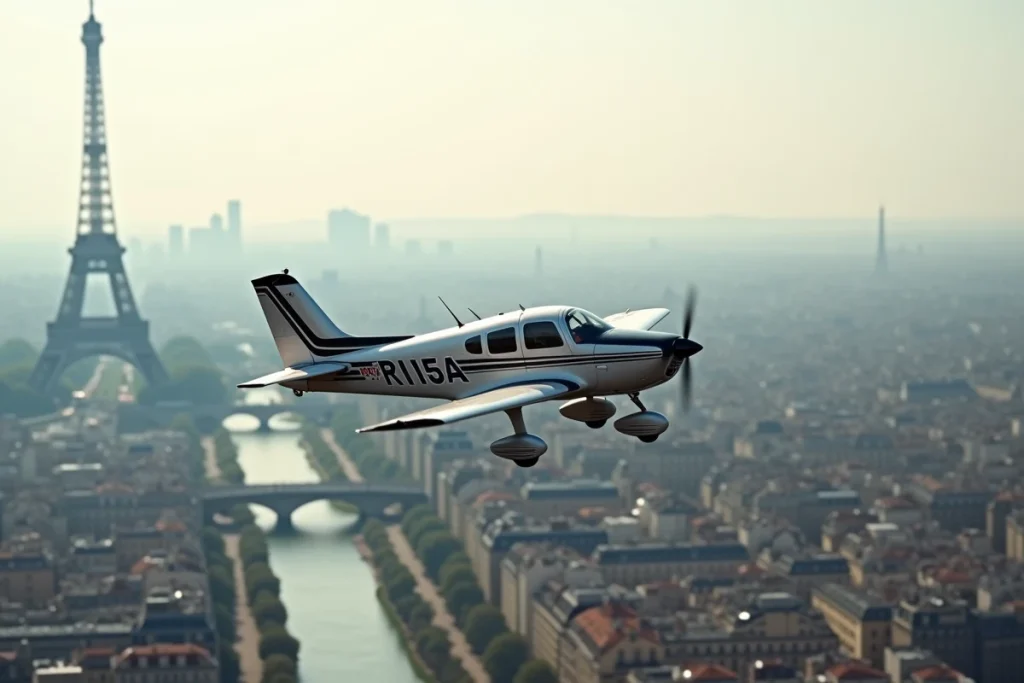
Flying over Paris by plane or helicopter remains a unique experience in the landscape of leisure activities in Île-de-France. The regulatory framework, noise constraints, and recent discussions about reducing tourist flights over the capital are reshaping the conditions for accessing this type of service. Between trajectory restrictions, quieter alternatives, and pricing realities, the topic deserves careful examination.
Regulation of Flights Over Paris: What the DGAC and the Prefecture Impose
The Parisian sky is among the most regulated airspaces in Europe. The Directorate General of Civil Aviation (DGAC) and the police prefecture jointly define the trajectories, minimum altitudes, and authorized time slots for any flight over the capital and the inner suburbs.
Tourist helicopters do not fly over central Paris at low altitude as one might imagine. The routes generally pass over the Seine, Versailles, La Défense, or the Chevreuse Valley, avoiding the densest areas. The trajectories are set by decree and are not negotiable by the operator.
Since 2024, regulatory discussions have intensified around reducing leisure helicopter flights in Île-de-France. Several additional restriction projects are under consideration, particularly regarding certain time slots and routes, driven by environmental concerns and complaints related to noise pollution. To find useful information about Paris from the air, licensed operators regularly publish updates on their authorized routes.
Plane or Helicopter Over Île-de-France: Two Distinct Experiences
The confusion between flying in a plane and flying in a helicopter often arises. The two experiences differ in concrete ways that influence the choice.
Helicopter Flight from the Paris Heliport
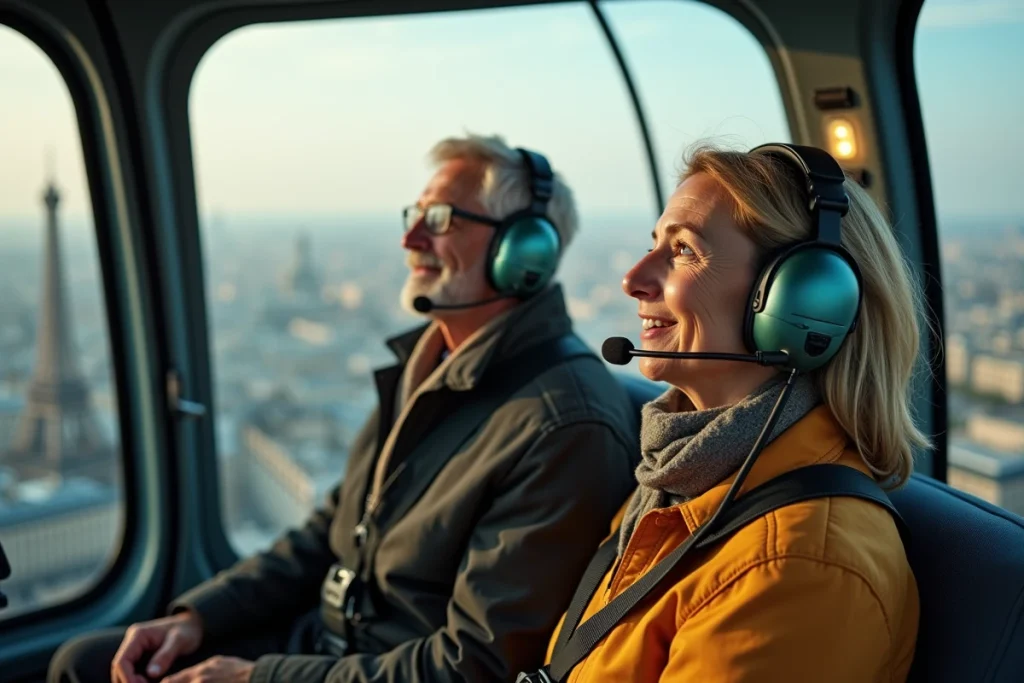
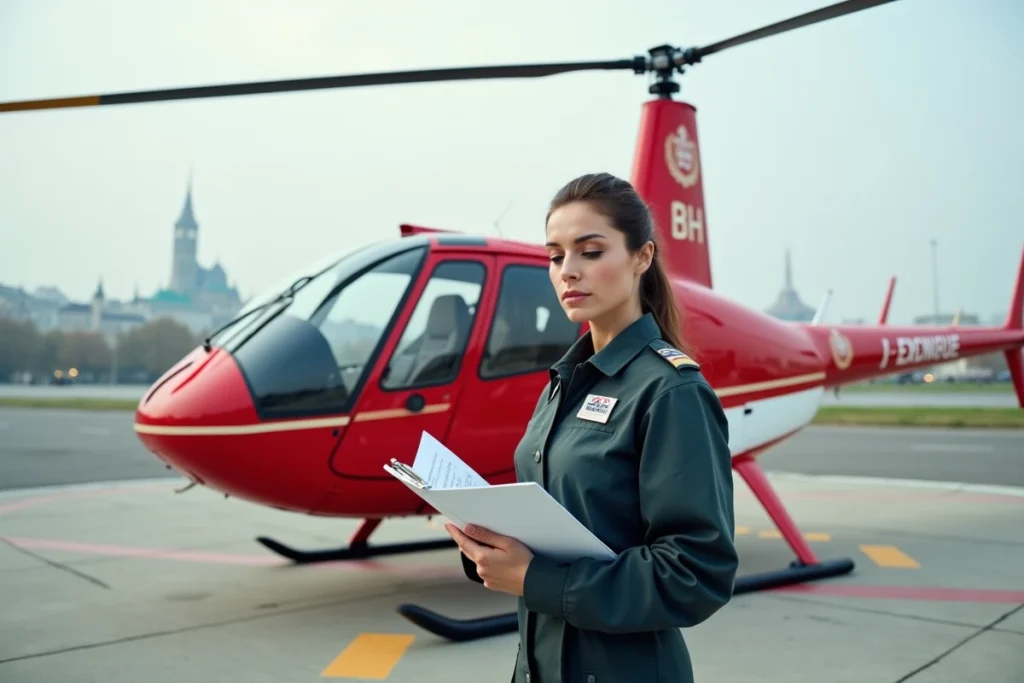
The Paris Heliport, located in the 15th arrondissement, serves as the departure point for most tourist helicopter flights. The aircraft takes off and follows the Seine westward, passing over sites such as the Palace of Versailles or the Saint-Cloud Park.
The helicopter offers a close-up view thanks to its ability to hover. The cabins typically accommodate between two and five passengers, limiting the number of seats per flight. The prices reflect this exclusivity: a tourist flight costs significantly more than a light aircraft experience.
Light Aircraft Flight from Île-de-France Aerodromes
Airplane experiences depart from peripheral aerodromes (Toussus-le-Noble, Lognes, Pontoise, among others). The flight radius is broader, sometimes covering the Marne, the Vexin Natural Park, or the Seine loops up to the Giverny region.
Co-flying through platforms like Wingly has made flying in a plane more accessible, by sharing costs between the pilot and passengers. Feedback varies on comfort: visibility depends on the type of aircraft (high-wing or low-wing), and cabin noise varies significantly from one model to another.
- The helicopter prioritizes proximity to monuments and trajectories along the Seine, with a high price per passenger.
- The light aircraft covers a wider area in Île-de-France, often at a reduced cost due to cost-sharing.
- The choice also depends on sensitivity to cabin noise: the helicopter is noisier, but the flight is shorter.
Alternatives to Motorized Flights: Captive Balloon and Hot Air Balloon in Île-de-France
Articles about flying over Paris focus almost exclusively on planes and helicopters. Low-noise alternatives are gaining ground, driven by a demand for less impactful tourism.
The Ballon de Paris Generali, located in André-Citroën Park, offers a captive flight over the capital. Open seven days a week with regular departures, it rises high enough to provide a broad panorama of the Parisian rooftops, without engine noise. The environmental impact is reduced compared to a motorized flight.
Hot air balloon flights in Île-de-France represent another option. The altitude reached (typically between 300 and 1,000 meters) and the flight duration (about an hour) allow for covering an extensive landscape. However, the hot air balloon does not fly over central Paris: departures are made from sites in the outer suburbs, and the trajectory depends entirely on the wind.
Noise Pollution and Environmental Pressure: The Future of Tourist Flights in Paris
The issue of noise generated by helicopters over populated areas is not new, but it has taken on a more pronounced political dimension. Residents along the flight corridors, particularly in western Paris and Hauts-de-Seine, have multiplied appeals and petitions against tourist rotations.
The police prefecture and the DGAC already strictly regulate altitudes and time slots. The available data do not allow for conclusions on a precise timeline for new restrictions, but the trend is clearly towards tightening. Some time slots and routes are subject to additional limitation projects.
This environmental pressure favors low-impact solutions. The captive balloon, hot air balloon, and even immersive virtual reality experiences (drone-filmed flights presented in VR headsets) appear as complements or substitutes to traditional motorized flights.
For helicopter flight operators, the challenge is twofold: to maintain a viable commercial offer while meeting the growing demands for noise reduction. The number of authorized rotations per day could decrease in the coming years, which would have a direct effect on availability and pricing.
Seeing Paris from the sky remains a memorable experience, whether by helicopter along the Seine or by light aircraft over Versailles. The regulatory framework is evolving, and silent alternatives like the Ballon de Paris Generali already offer a way to access the Parisian panorama without the constraints of motorized flight. The choice between these options depends as much on budget as on sensitivity to noise and environmental footprint issues.