
When shopping online, the payment form asks for a date in MM/YYYY format. These characters refer to your bank card’s expiration date. MM stands for the month (from 01 to 12), and YYYY is the year (for example, 2027). Printed or embossed on your card, this information indicates how long it remains valid.
Last day of the month: the rule payment forms don’t explain
Have you noticed that there’s no day shown on your card? The MM/YYYY format deliberately leaves out the day. The banking convention is simple: the card remains valid through the last day of the month shown.
A card displaying 09/2027 therefore works through September 30, 2027. On October 1, the issuer automatically deactivates it. This rule applies to both in-store and online purchases.
This distinction matters when planning a trip or an expensive purchase near the end of your card’s expiration month. The payment will go through on the 28th, as well as on the 30th or 31st if the month has one. To understand what MM/YYYY expiration means in detail, remember that the card remains valid through the last calendar day of the month.
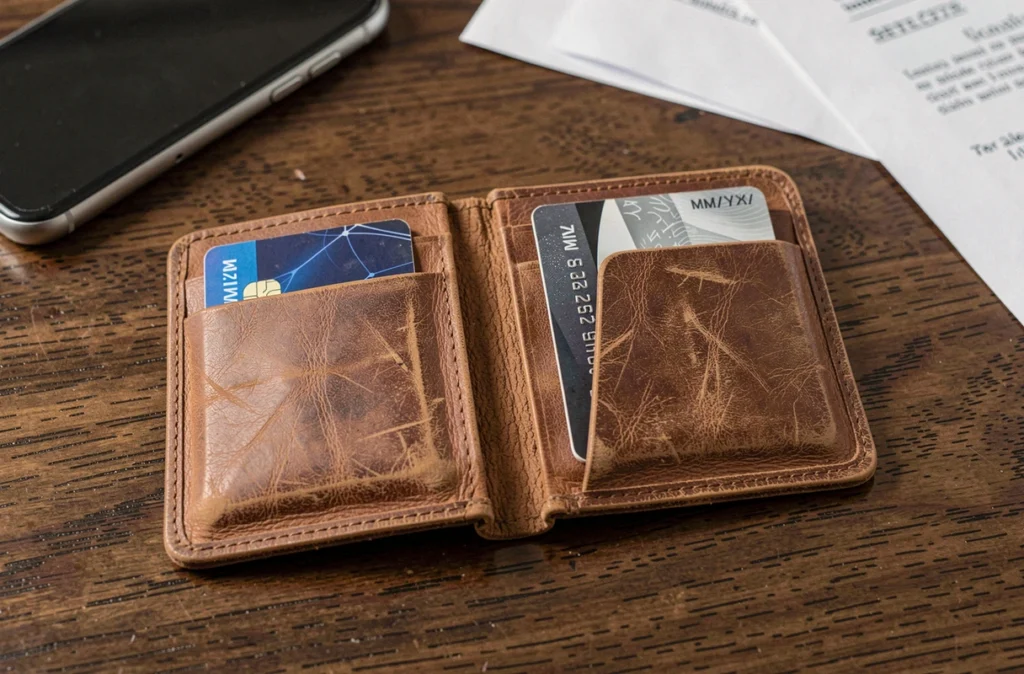
Expired bank cards and recurring payments: what really happens
Getting a replacement bank card involves more than just receiving a new piece of plastic. If you have saved subscriptions (streaming, phone service, insurance), you’ll need to pay attention during the transition.
Automatic card update services
Networks such as Visa and Mastercard offer services called Account Updater. Here’s how they work: when your card is renewed, the network sends your updated card details to participating merchants. Your subscription continues without any action on your part.
This automatic transfer only works if the merchant is enrolled in the service. An online store that doesn’t participate in the program won’t receive any updates. The payment will then fail the first time it’s attempted after your card expires.
What automatic updates don’t cover
Even when an update service is active, some declined payments have nothing to do with the expiration date. A fraud alert triggered by your bank, a closed account, or insufficient funds will cause a payment to be rejected—something a new expiration date won’t fix. The expiration date is just one of several factors in the payment authorization process.
Entering the MM/YYYY format incorrectly when paying online
A valid transaction is often declined because of an entry error rather than a problem with the card. Here are the most common mistakes:
- Reversing the month and year: entering 2027/09 instead of 09/2027. Some forms display MM/YY (two digits for the year), while others use MM/YYYY (four digits). Check the required format before submitting.
- Confusing the expiration date with the issue date: some cards display both. The expiration date is usually preceded by “EXP” or “VALID THRU.”
- Entering the current month when the card expires that month: the card is still valid, but a time-zone difference between the merchant’s server and your time zone may cause a decline at the very end of the month.
Always check the format requested by the form before entering your details. A field showing MM/YY expects 09/27, not 09/2027. The reverse is also true.
Banking security: why your card has a limited lifespan
The expiration date serves a security purpose that the card number alone cannot. Periodically renewing your bank card allows your bank to issue you new details (a new security code and, sometimes, a new card number). This cycle limits the period during which compromised information could be used.
If your card number is exposed in a data breach at an online store, the expiration date eventually makes the stolen information unusable. The fraudster has only a limited window before the card is replaced with a new one featuring a different security code.
Standard validity periods vary by financial institution and card type. Debit cards, credit cards, and prepaid cards don’t all follow the same renewal cycle. Your bank sets the validity period based on its security policy and the type of account you have.
What changes when your card is renewed
With each renewal, the card verification value (the three digits on the back) always changes. The card number may stay the same or change, depending on your bank’s policy.
If the number changes, you’ll need to manually update all payments saved with merchants, unless the Account Updater service handles it for you. If only the security code changes, previously authorized recurring payments will generally continue, because merchants that comply with security standards do not store the security code.

Plan ahead for your card renewal: what to check
Your bank will usually mail your new card a few weeks before the old one expires. If it doesn’t arrive, contact your branch rather than waiting until the last day. Postal delays and an unreported change of address are the usual causes.
Before activating your new card, review your saved payments. A bank statement covering the last three months should be enough to identify recurring charges.
- Make a note of every service billed automatically (streaming, phone service, cloud storage, insurance).
- Sign in to each account and update your payment details if necessary.
- Keep your old card for a few days after activating the new one, so you can check that all payments go through successfully.
A declined payment doesn’t always lead to an immediate service interruption. Most merchants retry the payment once or twice before suspending the subscription. This gives you time to resolve the issue, as long as you keep an eye on your bank notifications.