An Advent calendar for teens is no longer just twenty-four squares of chocolate lined up behind an illustrated cardboard cover. The options now span a wide range of interests (beauty, crafts, food, stationery), and customizable or DIY formats are becoming more popular every year. For parents, the challenge is still to choose something that reflects a teenager’s genuine interests without resorting to disposable gimmicks.
Advent calendar packaging: what the product listing doesn’t always tell you
Before even considering the contents, one detail deserves attention: the packaging. For example, Marionnaud’s children’s Advent calendar product listing states that the packaging is not recyclable or compostable and contains no recycled material, even though the paper sleeve comes from sustainably managed forests. The paper’s origin alone, then, doesn’t tell the whole story about the environmental impact of the complete gift set.
For a teen who cares about environmental issues, this kind of detail can turn a gift into a source of mixed feelings. Checking all the packaging components (plastic inner tray, protective film, glue) gives you a more accurate picture than the label on the outer box alone.
Some formats avoid the problem: reusable cotton bags, for example, can be used as containers and then for storage after the holidays. A set of twenty-four natural cotton bags is available in sizes of around 10 x 13 cm, leaving room for a variety of items without creating extra waste. Exploring gift ideas for a teen’s Advent calendar can help you figure out what works in these alternative formats.
Personalized or ready-made Advent calendar: how to choose for a teen
The market offers two main types. On one hand, there are ready-made themed calendars (beauty products, hot sauces, artisan sweets). On the other, there are empty calendars to fill yourself. The choice between them depends less on your budget than on how well you know the teenager’s tastes.
Ready-made calendars: convenience has its limits
A beauty or makeup gift set reveals a product each day (mascara, lip gloss, nail polish, eyeshadow). It works well for a teen who loves these things. The risk: miniature products that go unused because the shade or texture isn’t right.
Checking the full list of included products helps avoid disappointment. Some premium calendars list the contents of every compartment, while others keep them a mystery. A teen who likes choosing their own products may not enjoy having the surprise decided for them.
DIY calendars: more effort, a better fit
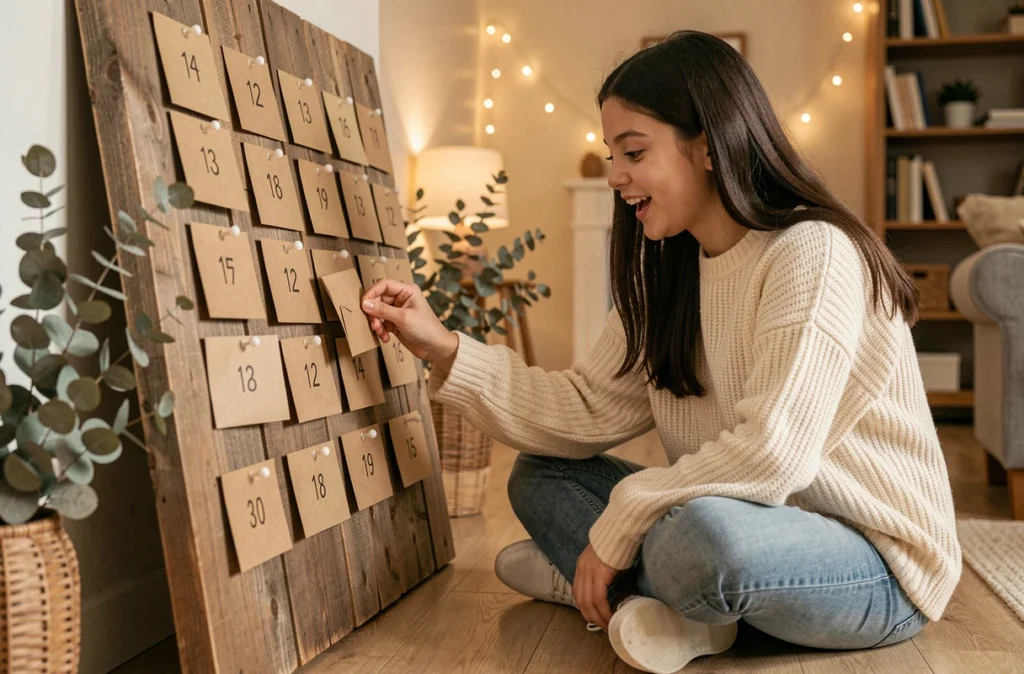
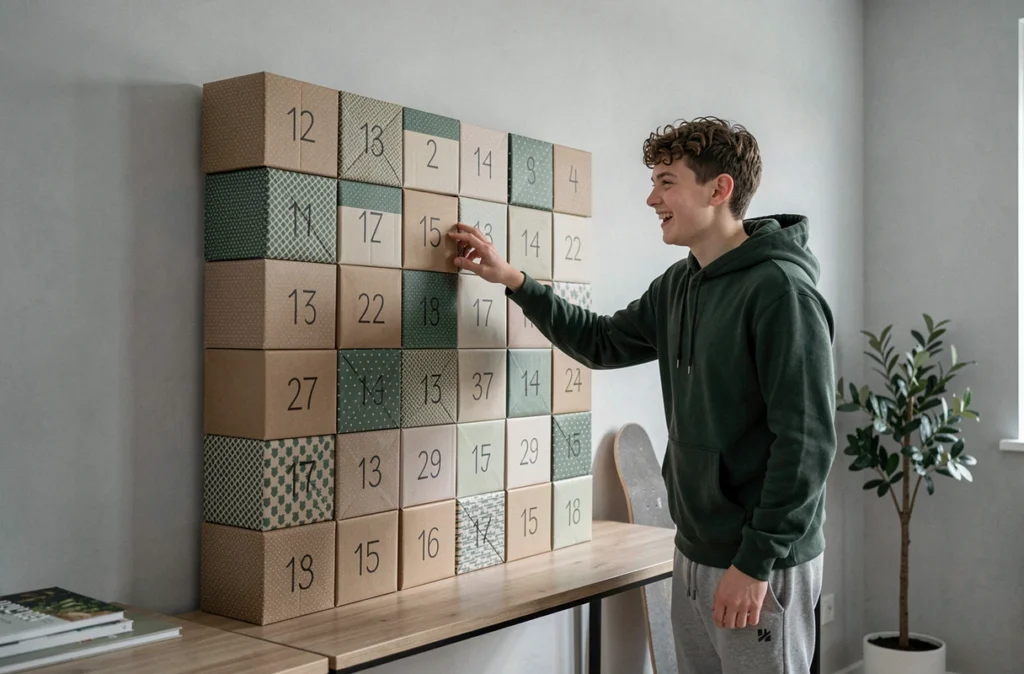
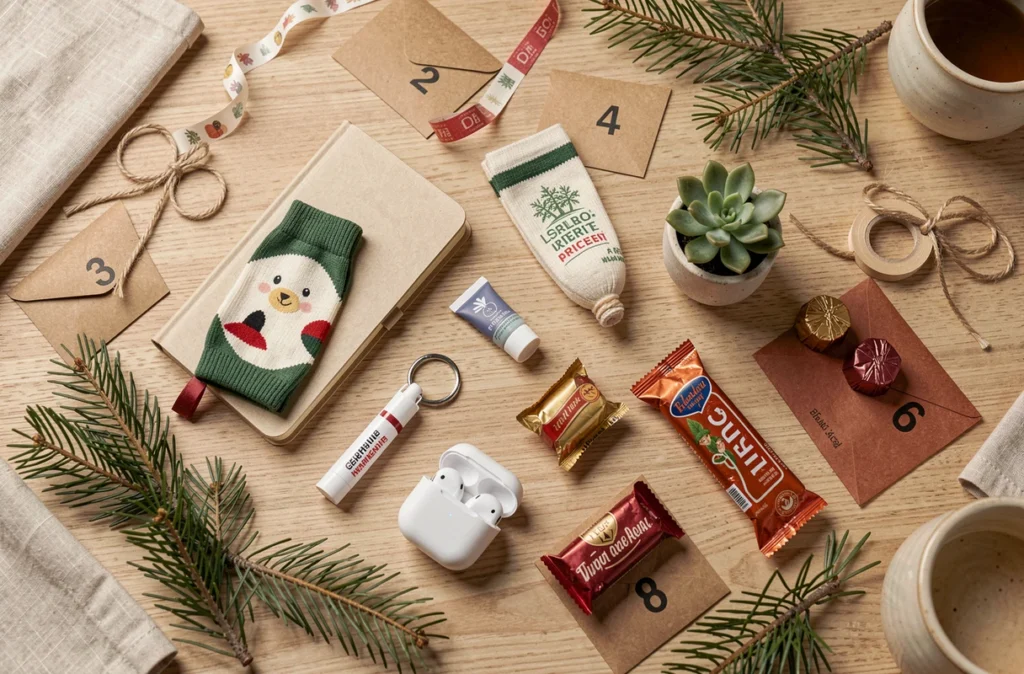
Empty calendars (numbered boxes, fabric bags, kraft paper pouches) take time to put together but offer one major advantage: every compartment is a deliberate choice. You can include anything from a voucher for an activity to a small item related to a specific hobby.
- A creative teen will appreciate carefully chosen supplies—alcohol markers, watercolor paper, bullet journal stickers—rather than a generic stationery assortment
- An athletic teen may prefer practical accessories: resistance bands, recovery balm, technical socks
- A teen who games or reads might enjoy prepaid cards, handmade bookmarks, or unusual snacks to enjoy during their sessions
What matters more is how well each item fits than how much it costs. Twenty-four thoughtful little treats make a bigger impression than one expensive item buried among twenty-three afterthoughts.
DIY Advent calendars for teens: practical pitfalls to plan for
Making a calendar at home is appealing because it’s unique. Platforms like Pinterest feature dozens of tutorials (origami pouches, decorated cardboard tubes, hanging envelopes). However, putting one together involves several constraints that are often underestimated.
The first is the calendar for the calendar. Ideally, start shopping and preparing well before December, sometimes as early as October, to avoid running out of themed trinkets or facing longer delivery times as the holidays approach.
The second is the size of the compartments. If they’re too small, you’re limited to candy or paper vouchers. If they’re too large, you’ll need to find twenty-four bulky items, which increases both the cost and the logistical challenge. Cotton bags measuring 10 x 13 cm offer a good compromise, with room for anything from a pair of earrings to a tea bag or a small notebook.
The third is ease of opening. Amazon customer reviews mention compartments that are so difficult to open that a knife is sometimes needed. Although these reviews are about a children’s calendar, the same issue can arise here: test every compartment before sealing the calendar to avoid daily frustration.
Advent calendars for teens: focus on experiences rather than things
A trend is emerging in recent selections: replacing some of the items with experiences. A voucher to choose the evening’s movie, a meal out together, an hour of video games as a family, or a cooking workshop. These “experience-based” compartments sometimes cost nothing and create a shared memory.
For a teen, this approach has an added benefit: nothing piles up. While twenty-four objects might end up in a drawer, twenty-four shared moments won’t clutter their room.
- Alternating an item with an experience keeps the surprises coming while limiting the number of “things” they receive
- Including two or three challenges (cook a dish, write a letter, tidy up a space) adds a participatory element that appeals to teens seeking independence
- Adding one or two vouchers that can be used after Christmas extends the fun beyond December 24
An Advent calendar for teens works best when it reflects what the teenager enjoys, not what the market offers by default. Check the packaging, choose the right format, plan ahead, and balance items with experiences: these four steps are all it takes to turn a December tradition into something to look forward to every day.