A successful children’s birthday party relies less on the decorative budget and more on the rhythm of the proposed activities. Recent recommendations favor short sequences, alternating dynamic and calm times, rather than a continuous two-hour program. Starting from this principle changes the way the party is conceived, from the choice of venue to the snack.
Short sequences and rhythm adapted to the child’s age
Most birthday guides offer a list of activities without specifying how to chain them together. The problem arises when a group game lasts too long: attention drops, conflicts arise, and parents spend more time managing tensions than enjoying the party.
The format that works is based on sequences of ten to fifteen minutes each. A physical activity (running, dancing, obstacle course) followed by a calm time (coloring, riddles, listening to a story) allows children to recover without disengaging. For younger ones, shortening these blocks further avoids sensory overload.
In practical terms, a two-hour party can be divided into seven or eight micro-activities rather than three large blocks. This division also facilitates transitions: when a game isn’t working, we move on to the next one without anyone noticing. Specialized platforms for organizing birthdays offer this type of turnkey formula, as can be seen on https://stationkids.fr/ which structures its animations around this principle of rapid rotation.
Birthday activities without elimination: including all children
Musical chairs, the wolf game, timed relays: these classics rely on progressive elimination. The first child eliminated sometimes waits half an hour for the game to end. For some children, less comfortable in groups or in competition, this mechanism turns the party into a trial.
Cooperative games replace elimination with a common goal. All participants win or lose together, which removes individual pressure. Here are a few formats adaptable to a living room or garden:
- A treasure hunt by team, where each group holds a clue necessary for others to advance, which forces collaboration rather than competition.
- A collective construction game, where children assemble a structure (Kapla tower, cardboard fort) with a shared time constraint.
- An investigation with clues, where each participant receives a role and partial information, making resolution impossible without everyone’s contribution.
These formats also suit children who do not like to run or be observed. Offering multiple levels of participation (searching, drawing, storytelling) allows everyone to get involved according to their preferences.
Birthday snack and allergies: separating entertainment from the meal
When the party takes place in an outdoor space or at a provider’s venue, the snack is often included in the package. The problem: standardized menus do not take into account food allergies, gluten or lactose intolerances, or specific diets.
Separating the entertainment from the snack gives parents total control over the food served. Some offers leave the cake and drinks to the family, allowing for the adaptation of each element. This separation also simplifies logistics: the provider manages the games, the family manages the table.
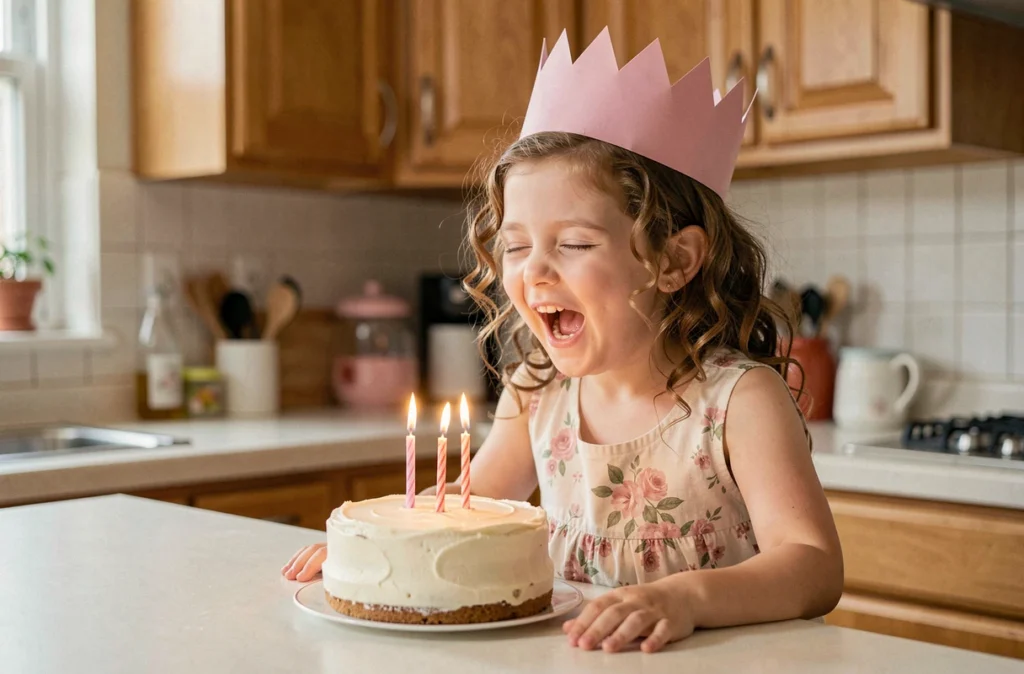
For the cake itself, planning an alternative without common allergens avoids embarrassing situations when blowing out the candles. A classic main cake accompanied by individual portions suitable for the concerned children remains the simplest solution.
Birthday gifts without disposable items: sustainable alternatives
Surprise bags filled with small plastic toys often end up in the trash within a week. Parents organizing the party spend a significant budget on single-use items, and the parents of the guests end up with gadgets that no one wants.
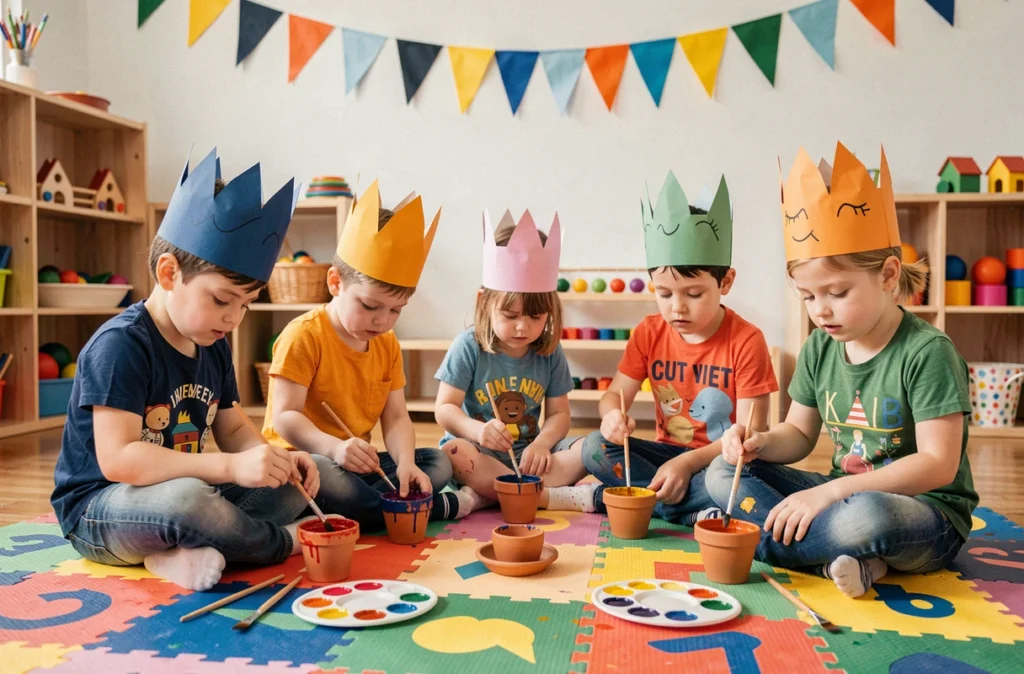
Experience gifts replace these bags with something that leaves a memory. A small creative workshop integrated into the party (making an item that the child takes home) serves as both an activity and a gift. The item made by the child has an emotional value that a plastic whistle does not.
Other concrete ideas work well:
- A packet of seeds to plant, accompanied by an illustrated sheet with the steps for growing.
- A voucher for an outing or workshop to do with their own parents, slipped into a personalized envelope.
- A second-hand book chosen according to age, wrapped in kraft paper decorated by the birthday child.
These choices align with an underlying trend: reusable decorations and sustainable materials limit waste associated with the party, from the first balloon to the last wrapping.
Party venue and often overlooked practical constraints
Many articles suggest venues (amusement park, escape game, climbing room) without mentioning the real constraints. The minimum age required, the maximum number of children accepted, and the mandatory presence of accompanying adults vary from one provider to another.
Before booking, three checks avoid unpleasant surprises. The actual minimum age (not the one displayed prominently, but that in the general conditions) sometimes excludes half of the guest group. The adult/child ratio imposed by some venues may require mobilizing accompanying parents. And the actual duration of the activity, once the briefing and setup are deducted, can sometimes be much shorter than the reserved slot.
Organizing the party at home remains an option that eliminates these uncertainties, provided the program is adapted to the available space. A modest-sized garden is sufficient for a treasure hunt or a creative workshop, while an apartment is better suited for calm games and indoor investigations.
The choice of venue should be made after defining the format of the activities and the number of guests, not before. An exciting escape game for eight children becomes chaotic with fifteen, and a large room rented for six guests gives an impression of emptiness that dampens the atmosphere.