Organizing a trip with children is not just about choosing a destination on a map. What transforms a simple journey into a memorable experience is the ability of the stay to provoke wonder. An unexpected landscape, an animal observed up close, a night under a different sky: these moments create what children spontaneously call “magic.”
Preparing a trip to the land of wonders for your family requires thinking differently about preparation. Instead of piling up activities, it’s about building a narrative thread that speaks to the youngest.
Travel pace adapted for children: the often-overlooked key
Have you ever noticed that a tired child no longer marvels at anything? Fatigue is the first enemy of family travel. Two visits a day are more than enough for those under eight.
The classic trap is to replicate an adult’s pace, hoping that the children will keep up. They do keep up, but they suffer. A child needs downtime to absorb what they see. An hour of free play in a local park after a morning of exploration is worth more than a third consecutive activity.
The Family Travel Barometer published by Voyage Family in September 2026 highlights that the majority of French families travel within mainland France. This choice is not only budgetary: it also reduces travel time, preserving children’s energy for the moments that matter.
Building an itinerary in the form of a story
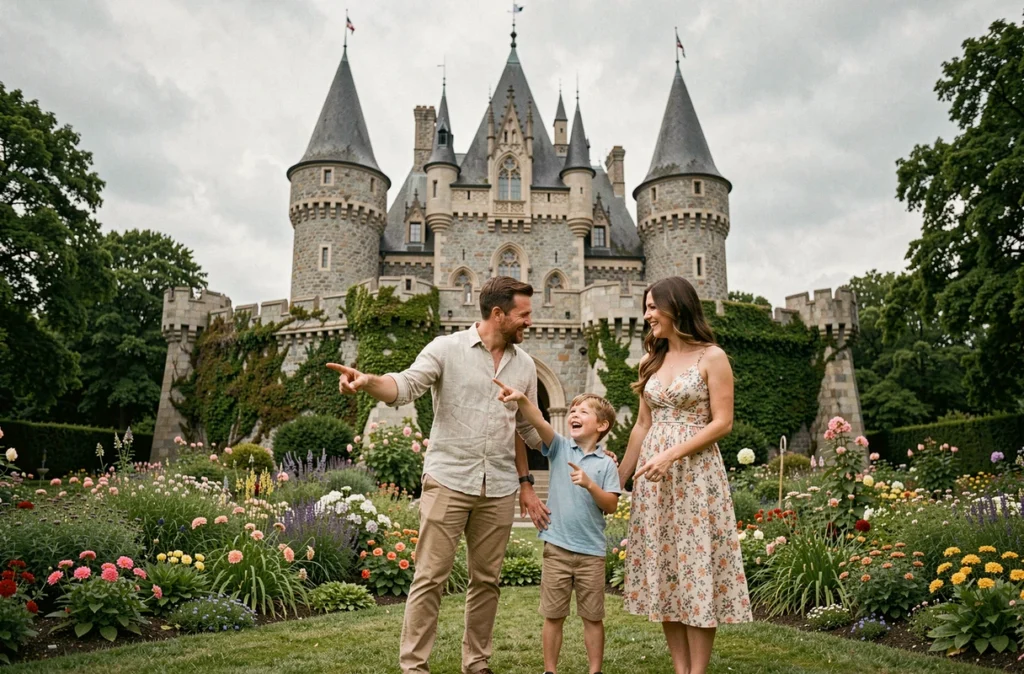
Instead of a list of places, offer your children a narrative thread. Before departure, tell them what they will discover like the chapters of a book. “First, we will see where the flamingos live. Then, we will sleep in a cabin by the water.”
A narrative itinerary transforms the journey into an adventure. The child no longer asks “when will we arrive?” because they are looking forward to the next chapter. This principle works just as well for a weekend in Camargue as for a trip to the other side of the world.
Family vacations and nature: what truly provokes wonder
Amusement parks generate excitement. Nature generates wonder. The difference is fundamental.
A child observing a starfish in a tidal pool experiences a complete sensory experience. They touch, they feel, they question. This type of direct contact with living things is hard to replicate in an artificial setting.
Specifically, the destinations that work best to amaze children share a few characteristics:
- Direct contact with water, animals, or landscapes, without glass or barriers between the child and the environment
- Unusual accommodations (cabin, yurt, treehouse) that extend the change of scenery even into sleep
- Activities where the child acts rather than just watches: picking, building, guided wildlife observation
Wonder arises from participation, not from spectacle. A nature tour where the child collects leaves for a herbarium will leave a stronger impression than an audio guide, no matter how well designed.
Multigenerational travel: involving grandparents and cousins
Recent surveys by the Family Travel Association and the Hilton Trends Report 2026 confirm a significant increase in trips involving multiple generations. Parents, children, grandparents: the multigenerational format is becoming a distinct segment of family tourism.
Why does this format work so well for wonder? Because a grandparent tells stories differently. They pass on memories, compare with what they have experienced, and express amazement with a sincerity that children immediately pick up on.
Organizing the stay so that each generation finds its joy
Planning separate moments during the day avoids tensions. Grandparents enjoy a quiet morning while parents take the children on a hike. Everyone reunites at lunch with stories to share.
The “skip-generation” format (children spending a few days alone with their grandparents) is also on the rise. For families who have access to it, it’s an opportunity for mutual wonder: grandchildren discover a different perspective on the world, and grandparents regain an energy they thought was lost.
Preparing the trip with children: the land of wonders starts at home
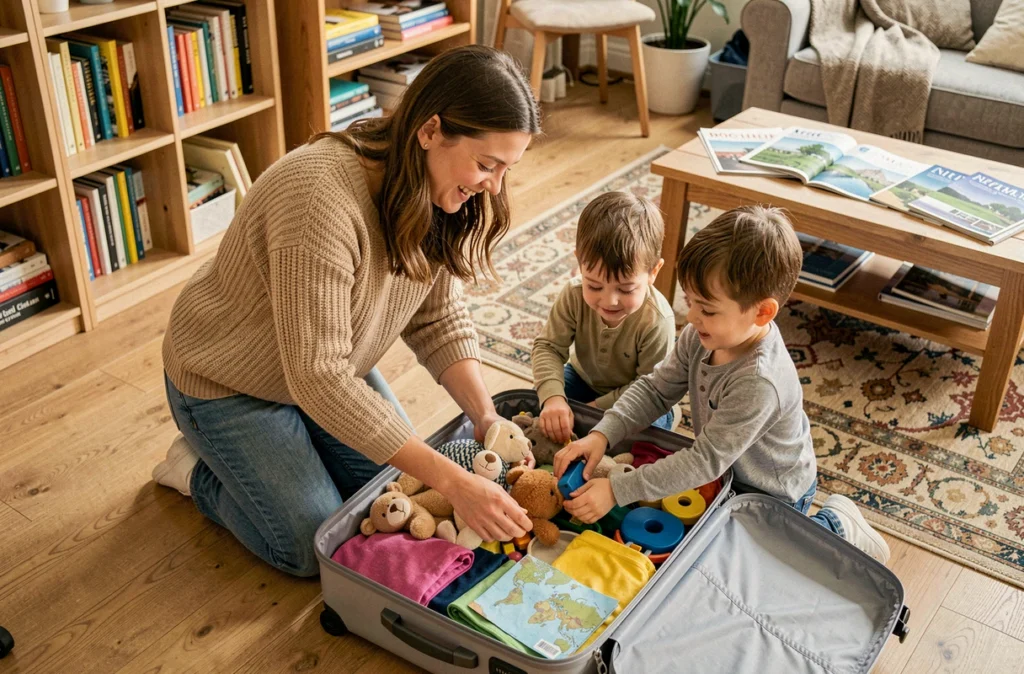
Wonder does not start upon arrival. It begins the day the child participates in the preparation. Assigning them a concrete mission changes their relationship with the trip.
Here are some proven examples:
- Letting the child choose one activity from the three planned each day (they become more invested in what they have decided)
- Giving them a travel journal or a disposable camera to document their discoveries
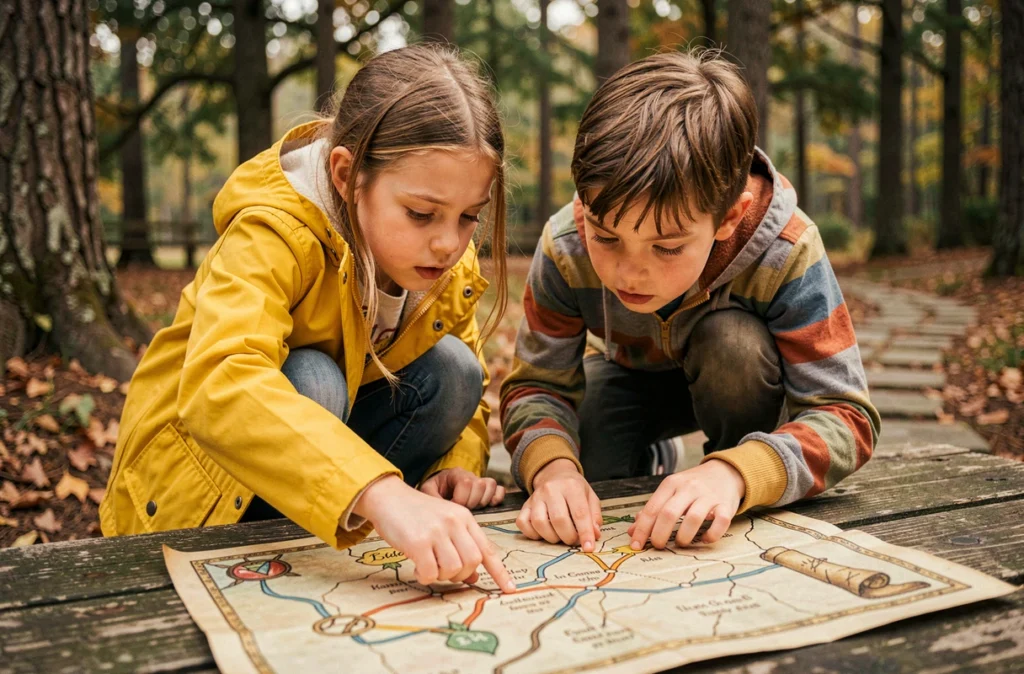
- Spreading a map on the table and tracing the itinerary together, naming the stops
A child who has participated in the organization arrives on site in explorer mode. They recognize places, anticipate stops, and ask more specific questions. They are no longer a passenger: they are an active member of the adventure.
Managing screens during the trip
The temptation to hand over a tablet during travel is strong. But a child glued to a screen for two hours of driving will not see the passing landscape. Alternating thirty minutes of screen time with observation games (counting cows, spotting signs of a certain color) helps keep their attention connected to the outside world.
A successful family trip is not one where everything goes as planned. It is one where the child returns with a memory they still recount three months later, eyes wide open. Choosing the right pace, focusing on nature, and involving each generation are three concrete levers to ensure that the land of wonders does not remain just an expression, but becomes a lived experience.