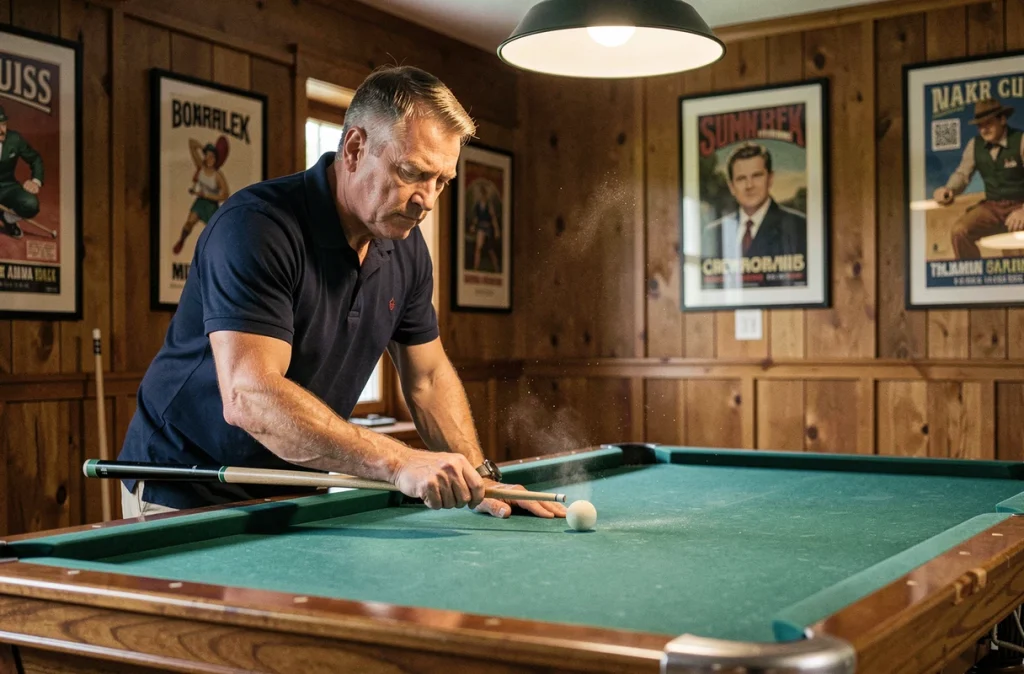
On a carom table, a ball launched in six cushions sometimes travels more than ten meters before reaching its target. At this distance, the slightest slowdown caused by the humidity of the cloth or the stiffness of the fibers distorts the placement. This is why heating the playing surface remains a central topic for carom players, even though regulations have recently changed.
Removal of the federal obligation: what it changes in clubs
The French Billiard Federation has removed article 1.1.07 from the Sports Code, which mandated a surface temperature between 25 and 30 °C. Heating the slate is therefore no longer federally regulated. In practice, each club now decides whether or not to heat its tables.
This removal does not mean that heating becomes unnecessary. It transfers responsibility to competition organizers and room managers. We are already seeing very different approaches: some clubs maintain heating to ensure consistent play, while others reduce it to limit energy costs. Feedback varies on this point, as the impact strongly depends on the condition of the cloth and local humidity.
When looking to master the techniques for heating a billiard table, it is important to remember that the temperature of the slate is just one parameter among others. The age of the cloth, the wear of the cushions, the number of players in the room, and any air conditioning all influence the quality of rolling.
Rolling resistance of the cloth: the real technical problem
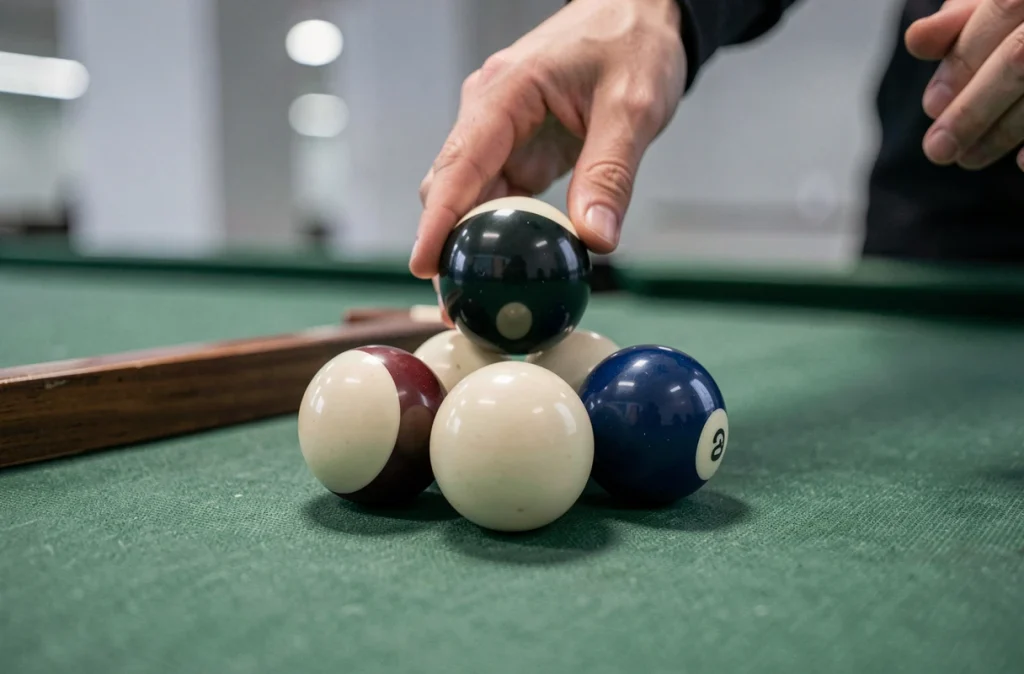
Heating a billiard table is not aimed at player comfort. It reduces the rolling resistance of the cloth by driving out moisture trapped in the textile fibers. A damp cloth swells, its fibers stand up, and the ball slows down sooner than expected. On a short distance (American billiards, snooker), the effect remains manageable. On the long distances of carom, it becomes prohibitive.
The mechanism is simple: the heat transmitted by the slate dries out the textile layer in direct contact. The fibers flatten, the surface becomes smoother, and the ball retains its kinetic energy longer. This is why carom is the only discipline that has historically mandated heating in official competition.
What matters beyond temperature
Raising the temperature of the slate does not correct worn or poorly stretched cloth. An aged cloth with fibers crushed by months of play will not regain its initial qualities thanks to heat. Similarly, a new but thick cloth, chosen for its durability, presents a natural resistance that heating mitigates but does not eliminate.
The choice of cloth weight remains a compromise between lifespan and rolling speed. A thin cloth speeds up play but wears out quickly. A denser cloth lasts longer but requires more consistent heating to offer comparable rolling.
Heating methods for a billiard table: plates, resistors, and alternatives
Two systems dominate in clubs and among equipped individuals:
- Heating plates under the slate: flat electric resistors glued or placed under the slate tiles distribute uniform heat. This is the most common system in competition, as it ensures a consistent temperature across the entire surface.
- Flexible heating mats: similar to domestic underfloor heating, they slide between the frame and the slate. Less expensive, they sometimes heat unevenly if not installed carefully.
- Indirect heating through the room: some clubs prefer to maintain the room at a stable temperature rather than heating each table individually. This approach works in small, well-insulated rooms but remains insufficient in larger spaces.
The thermostat is an element not to be overlooked. Without regulation, the temperature of the slate can rise beyond what is necessary, prematurely drying out the cloth and accelerating the wear of the textile fibers.

Energy constraint in the room: the 19 °C limit
Buildings open to the public are subject to a heating limit of 19 °C on average for ambient temperature. During short periods of vacancy, the ceiling drops to 16 °C, and to 8 °C for prolonged closures. This rule does not directly target the billiard slate, but it constrains the overall environment of the room.
A club that heats its tables to 28 °C in a room maintained at 19 °C creates a notable thermal differential. The gap between the table and the ambient air can cause condensation on cold balls placed on a warm cloth, especially in winter when players come in from outside. Allowing the balls to acclimate for a few minutes on the table before starting a game prevents this phenomenon.
Optimizing the consumption and quality of play ratio
Continuous heating is expensive, especially for a club with several tables. A few practices can help reduce costs without sacrificing rolling:
- Schedule heating to start two to three hours before the room opens, allowing the slate to reach its operating temperature.
- Turn off the heating of unused tables during low-traffic times.
- Use an insulating cover on unused tables to retain acquired heat and reduce reheating cycles.
The combination of an appropriate cloth, a well-adjusted thermostat, and scheduled heating management yields better results than permanent heating at full power. A thin cloth on a regulated slate offers suitable rolling for carom without excessive consumption.
Heating a billiard table remains a technical tool serving the precision of play, not a fixed obligation. Since the removal of the federal article, each room adapts its practice to its budget, equipment, and level of competition. The starting point always remains the same: check the condition of the cloth and cushions before adjusting the thermostat.